A Whisper of Hope and An Extreme Rescue

Act of Valor isn’t on the top 10 Christmas movies list, but it does give a vivid description of a rescue mission. It shows the danger a SEAL team was willing to face in order to rescue a CIA operative that had been captured and tortured by the enemy. She was injured so severely that there was nothing she could do to help with her rescue. It shows the sacrifice that team was willing to make to get her back to safety. They put their lives at risk in order to save hers. This rescue is very exciting to watch. It’s a close call to the very end because the enemy wasn’t giving her up without a fight.

This mission reminds me of how God rescues us from darkness. Before we ever whisper God, please save me, before we see that we need to be rescued, an intricate backstory has taken place. A backstory that involved the greatest rescue mission ever.

For in him all the fullness of God was pleased to dwell, and through him to reconcile to himself all things, whether on earth or in heaven, making peace by the blood of the cross.” (Colossians 1:19-20)

“There’s no need for peace unless there’s a war.” Rev. Brad Mercer from Highlands Presbyterian Church in Ridgeland, MS pointed this out in a recent chapel sermon.

There has been a war going on since the beginning of time.

It’s a war that sounds like a movie plot.  A war between good and evil, between the Creator of the Universe and His enemy who desperately wants to rule that same Universe.  But it’s better than any movie plot – because it’s real.

God created this beautiful world, and created man and woman, made in His image.  He put in the human race a need for relationship, connection, belonging.

Satan didn’t bring an army in and confront God head-on. No, he slithered in and convinced Eve that the face-to-face relationship she had with God wasn’t enough, his words cast a shadow in her mind about the goodness, love, and intention of God.

O how he must have celebrated as she and Adam bit into that fruit. He had won! The precious souls God created and loved had rejected Him and doubted His goodness.  And with that bite the beautiful world God spoke into being became enemy territory.

And then, even in the messy, sorrowful brokenness, God promised to send One who would crush the head of evil. Those were fighting words.  With those words God gave a whisper of hope, a promise of a rescue.

The world He made grew dark, the people He loved grew blind in the darkness. His people grew deaf to His words and the enemy’s hold on them grew stronger.

Long lay the world in sin and error pining

Pining means to yearn deeply for, to suffer with longing. The people made in God’s image, loved by God, people made for connection, belonging, and love,  knew, even while sitting in the darkness that something was missing. They yearned deeply for what they were made for, even though they had been in the darkness for so long that they didn’t know what to call it. They only knew something was missing and they couldn’t find it in themselves.

Some turned to worshipping idols, literally turning pieces of wood and stone into objects of worship. Some turned to worshipping life in this world, living in the moment, keeping busy, or filling their lives with pleasure. Some turned to worshipping control with rigid rule keeping.

All this worship was in an effort to stop the yearning and longing. But only one Person could fulfill that longing to find connection, belonging, and love. Doesn’t that weary world sound like the world we live in and the people like you and me?

“God knows that each and every other thing we idolize holds us captive without us realizing it. He knows that every other thing we worship demands more and more from us until we have nothing left to our names but empty shells.” Meg Lynch

Through all those years God reminded His people. He whispered words of hope, words of Someone who was coming to save them.

Because God is the only one who can answer this longing, He is the only one who can set His people free. And He planned the greatest rescue mission ever.

Light broke into the darkness with an impossibility, a virgin with child. Its beacon was a bright star, and the Rescuer was a baby. God didn’t go in with guns blazing, but as the most vulnerable of all creatures.

Till He appeared and the soul felt its worth, A thrill of hope, the weary world rejoices, For yonder breaks a new and glorious morn

Everything changed when the light broke into the darkness. The people who were looking for Jesus to come saw the beginning of God’s whisper of hope.

We have the whole picture.

We see that our rescue began with His birth that night in Bethlehem and progressed in His death on the cross, and was complete when He rose from the dead, bringing peace.

Not peace between good and evil, but peace between God and the people He created. This rescue mission was to get His creation, His beloved, out of the darkness, out of the enemy’s hold.

This rescue speaks to our worth and to God’s power, mercy, grace, and love and that is exactly where our enemy slithers in. Our enemy wants to make us doubt the goodness, love, and intention of God toward us. It’s called sabotage and deception – and those are war-time techniques.

The truth?

We were worth this extreme rescue.

God planned this dangerous mission because He says you and I are worth fighting for, we are worth rescuing, and we were made for life in the light.

But when I watch the news, when I talk to people, when I scroll through Facebook, I see people harassed by the enemy of their soul, tossed around like waves in the ocean, living without hope, numbing their pain, surrounding themselves with layer upon layer of rules.

I see people very much like the people that lived in the days when Jesus came.

A people that need to be rescued. A people whose rescue began many years ago. And this rescue, the greatest rescue mission ever, began with a baby.

This baby makes it possible for every heart to have peace with God.

And our part in the rescue? We are like the CIA operative who was injured so severely that there was nothing she could do to help with her rescue.  God doesn’t ask us to help with our rescue. He only asks us to believe.

“This is the work of God, that you believe in Him who He has sent.” (John 6:29)

We can’t help with our rescue because it’s already been done. We only have to believe that we’ve been rescued. Sounds too easy, doesn’t it? Sounds like He did all the work and we just have to write a thank you note.

But what we believe, really believe, doesn’t stay inside us. Living out what we believe will make a difference in every other area of our life – our thoughts, our actions, our words. When we believe that God planned this dangerous mission because He says you and I are worth fighting for, we are worth rescuing, and we were made for life in the light, it makes a difference that lasts forever.

Where are you today? Does the thought of being rescued and having peace with God seem far-fetched? Do you feel you are too far gone, out of God’s reach? Let this crazy truth sink in. Jesus left the perfection of heaven, stepped into time and history to carry out this rescue mission with you in mind.

Wherever you are right now, whatever is going on in your life, this truth stands. You are loved by God, made in His image, made for connection, belonging, and love. You are worth fighting for and you were made to live in the light.

*********

This post is part of my December Facebook Live series, “What Difference Does Jesus Make?” Please join me on my writer’s Facebook page, Erin Ulerich, on Wednesdays in December. I’ll be live at 6:00 a.m. CST, but the video will be available to watch whenever you can. I am looking forward to connecting with you in these few moments of sanity during December.

I am giving away this spunky little mug through a drawing. To be the lucky recipient of this mug, all you have to do is comment on the Wednesday videos in December.  Let me know what you found encouraging or challenging during the video. Each week that you comment I will put your name in the drawing.


Jesus Is With Us In Our Joy and Our Pain

God’s desire from the beginning has been fellowship. To be with us.

God walked with Adam and Eve in the garden of Eden. Face to face.  When sin entered the world, that relationship was broken, but God’s desire did not change. Throughout the Old Testament His heart cry is repeated, “I will be their God and they will be my people.”

This desire is also found in the language surrounding the reason God offers us salvation through relationship with Him, “They shall see him face to face.”

That’s the goal. Connection. Intimacy. God created each one of us with the need for connection, the need to know and be known by Him.

And then he opened the folds of time and stepped into our world as one of us. Jesus, Immanuel, which means God with us.

With us. Not watching from a distance. Not a kind but powerless force hovering around us. With us, experiencing life in this broken world.

Jesus knows the pull of this world on our heart. He experienced every emotion that we have felt or will ever feel. And he has experienced one emotion that we will never experience – abandonment by God.

We often feel alone, I’m not discounting that. But the reality is that God has promised to be with us and to never forsake us.  Jesus willingly experienced complete abandonment on the cross in order to offer us peace with God.


Why is God being with us important? What difference does it make?

We have an enemy that works overtime to make us feel isolated, misunderstood, abandoned. He knows that when we feel alone and vulnerable, we are more apt to listen to his lies. We were made for connection and intimacy, so when we feel alone it is easy for our hearts to make this false conclusion: I am not known, therefore I am not loved.

Jesus is with us, out of love for us, to draw us into relationship with Him. In Jesus we are known, loved, connected – the very things we were created to experience.

Because Jesus experienced life in our skin, He is with us in our joy and in our pain.

Pain is part of living in this broken world. We feel pain on many different levels, and we usually work hard to avoid pain on every level. We avoid it by staying busy, numbing out on Netflix, eating, not eating, drinking alcohol, shopping, working, working out, the list is endless. We want to avoid pain so much that we even take good things and twist them to keep numb instead of stopping and looking our pain in the eye.

And the main problem with all the numbing that we do is this truth: We were not made to live life numb. We were made to push through the fear, look our pain square in the eye, and live life in full.

Does that sound scary? You bet.

But we don’t do it alone.

Jesus stands with us when we face our pain. He guides us into healthy ways of living and thinking and acting. His resources are not limited, and He will provide what we need to face our pain.

On the podcast This Good Word With Steve Wiens, Seth Haines says this on the episode called Inner Sobriety.

“The foundational question is, Can I sit in my pain and feel it without needing to eat, drink, do whatever, look at porn? Can I sit in that pain, can I invite Christ into that pain and then can I cultivate a prayerful imagination of what it looks like for Christ to walk in that pain with me?”

What is your pain? Can you imagine Jesus speaking into your pain? What do you think He would say?

We are not alone in our pain. Jesus stepped from the perfection of heaven into the broken chaos of this world to walk with us. Our God is with us every step of the way.

And what a difference that makes!

*********************************************

Please join me on my writer’s Facebook page, Erin Ulerich, on Wednesdays in December as we explore the question “What difference does Jesus make?” I’ll be on live (and attempting to speak in complete sentences) at 6:00 a.m. CST, but the video will be available to watch whenever you can. My prayer is that in those moments our hearts will lean toward Jesus in adoration and praise. My hope is that we will enter our day stronger and more peaceful.

O come let us adore Him.

It’s A Wrap!

I’m blowing the (virtual) dust off the bog today after a summer of no writing.

Well, that’s not entirely true.

I wrote grocery lists, snarky texts to blow off steam after surviving  pre-teen drama storms, and SOS texts to my husband when those storms reached critical mass.

That is not the kind of writing that fills my soul with joy.

In the midst of surviving the summer, I learned something the hard way.

After creating an entire video series on the 5 areas that are critical for taking care of ourselves, this summer I neglected 99% of these areas.

(What kind of person creates an entire video series and then doesn’t follow her own advice? Geez.)

This neglect impacted every part of my life. Not all at once, of course. But as the weeks went by, I grew more agitated, more reactive. I didn’t like being around myself. I wasn’t nice to myself either.

This experience makes me even more convinced that these 5 areas really are CRITICAL for living life with courage, strength, and resolve. Just ask the people who had to live with me while I spiraled into my pit.

Today I am so excited to share the final video in the series, the wrap-up, with a few thoughts about badass-ness and fighting for hope. I encourage you to go back and watch the entire series. The videos aren’t long, because getting back to badass isn’t complicated, it just takes focus.

I created this video series because I firmly believe that the way we care for ourselves impacts the way we fight for hope. When I am feeling badass, when I am living life with courage, strength, and resolve,  I make brave decisions, I speak up for what is right, I respond to situations instead of reacting in anger and panic. It gives me strength as I fight for hope.

Our world needs more of this kind of badass.


The Back to Badass Wrap-Up


When Nausea is a Good Thing

We’ve made it to the fifth (and final) area of our video series: Back to Badass: Living Life with Courage, Strength, and Resolve.

This area is Stepping Toward our Dreams. The action point for this area sounds pretty easy, Do one thing each day to step toward our dreams, but you and I both know that pursuing dreams involves overcoming fears, facing our insecurities, and our feelings of worth.

Not so easy.

We need courage, strength, and resolve to even start pursuing our dreams and these qualities actually increase as we pursue our dreams. It’s a wonderful cycle that helps us push past our comfort zones. You know, that place where things feel safe and comfortable and where you hear the whisper “that’s not for you. that’s for other people.”

I’m not against safe and comfortable by any means, but I’ve discovered that if I’m staying safe and comfortable out of fear… then it’s not a healthy place to be.

“If your dream doesn’t make you want to throw up, it just isn’t big enough.” When it comes to pursuing dreams nausea can be a good thing, especially when it’s accompanied by that “I was made for this!” feeling.


I’d love to know your thoughts on these quotes:

If your dream doesn’t make you want to throw up, it’s just not big enough.

It’s not who you are that holds you back, it’s who you think you aren’t.

As I pursue my dreams, I ‘ve discovered that I am my own roadblock 90% of the time. I think of all the reasons I can’t do something instead of asking “What would it take for this to happen?”

I am more likely to ask this when I am living with courage, strength, and resolve.

What about you? What would it take to step toward your dreams?


Resources:

Podcasts: Chalene Johnson, Lewis Howes, Michael Hyatt

Hopewriters  – The community at hopewriters.com has changed my writing and inspired me to continuously step out of my comfort zone. Being a part of this community has helped me move forward in the writing side of writing and in the sometimes-scary tech side of writing. The low monthly fee is the best investment I’ve made toward my writing dreams.  (The link on the sidebar of my blog is an affiliate link.)


When Hope Is Tender

I have the privilege of working at French Camp Academy, a Christian home and boarding school tucked away on the Natchez Trace. My favorite part of working here is getting to know the students.

Our students typically come from difficult home situations. Many of them wrestle with the darkness in their stories, not wanting that darkness to become their identity. So fighting for hope happens here little by little, on a daily basis.

Kat is one of the students I’ve gotten to know this year. I am so proud of her for wanting to share a little of her story.When I read Kat’s words, I see a Hope Warrior being formed.

Hope. Most of the time we don’t think about that word. I had hope to be adopted. I had hope to be loved. Most of the time we hope to make an A or get that job. Sometimes we hope to make that team or get that car.

I had hoped God could change me. He sure did.

I was struggling at home. We were looking for a godly getaway. We found FCA. I hoped it would be good and It was! I love it there.

That is hope.

-Kat, 7th grade

Sexual Addiction: Two Sides of the Coin

Sometimes there is no script for the things that happen to us in life. We don’t know what to do, so we try to figure it out on our own and just cope. Many times the way that we cope with life events leads us into addictions or into a relationship with an addict.

Addictions happen when we try to numb the pain in our life. We become addicted to the few moments of relief from the pain, and continue to seek out the thing or person that gave us that relief.

Addiction means – the state of being enslaved to a habit or practice. The Latin stem of the word actually means a giving over; to surrender. (dictionary.com)

It is surrendering to the darkness in our life.

Addiction of any kind operates in darkness and fills us with shame, but sexual addiction seems to be controlled by it.  Shame is the voice that whispers mean things because it doesn’t want us to come out of the dark. It is a deadly fungus that grows stronger in silence and fear.  It covers us like a raincoat so that we can’t feel God’s love raining down on us. It convinces us that hope, joy, forgiveness, and peace are great ideas – for everyone except us.

But here’s the truth about shame. It cannot survive in the light. It will threaten, howl, whine and beg us to stay cowered down in the darkness. But once we step into the light and share our story with others, its death grip begins to loosen.

Out in the light we can hear truth, we can feel God’s love, we can experience compassion from others who are also struggling.  We can see that change is possible.

Fighting for hope often feels impossible when addiction is involved, no matter which side of the coin we are on. The truth is the more we fight for hope, the more warrior-like we become.

Hope Warriors push against the darkness, yelling “You will not win!”  into the hopelessness that hangs over us like a fog.  Hope Warriors let loose that war cry “What you meant for evil, God will use for good!”

Hope Warriors know that whatever is going on right now as you read this, the last chapter has not been written. There is still hope and it is worth fighting for.

Hope begins growing when we realize that the ways we’ve coped and acted all these years are not helping us. It continues to grow as we discover different tools and resources that help us.  I want to share two resources with you today.

Forest Benedict writes to men and women stuck in sexual addiction in his book, Life After Lust.

He offers hope and practical direction as he shares his own story of addiction and recovery.  He is a Licensed Marriage and Family Therapist and certified Sexual Addiction Treatment Provider (SATP-C) living in Fresno, CA.

Forest shares the first chapter of his book here.

It is available in digital or paperback through Amazon. Click here to order.

Intimate Treason by Claudia Black, PHD and Cara Tripodi, LCSW is written to women and men who are partners of sex addicts.

“Those who act out sexually – whether through pornography, cybersex, prostitution, voyeurism, and/or multiple affairs – leave their partners reeling in rage, incredible shame, and isolation. In this taboo-shattering and practical guidebook, partners affected by sex addiction can learn to develop healthy boundaries and make positive changes in their lives. The skills-building exercises presented are designed to help partners better understand the disease of addiction and how it is affecting their relationship. Intimate Treason provides a path to healing that gives voice to partners’ truth as they travel on their own journey of recovery.” (summary on back cover)

Intimate Treason is also available through Amazon. Click here to order.

Sexual addiction is like a monster tornado swirling in the middle of a relationship. Although both partners are experiencing the harmful wind and hurling debris, they are each experiencing the tornado in completely different ways.  If you or someone you love have been impacted by sexual addiction on either side of the coin, these resources could provide the first step on the road to recovery. Silencing shame and walking in the light takes courage and tenacity, and it brings out the Hope Warrior in us.

Hope is worth fighting for!

Both of these resources are available on Amazon. The links I’ve provided are Amazon Affiliate links, which doesn’t change the price of the resources, but it helps me as an Amazon Affiliate.

Finding Hope When Fear Rages

jbo8vdcy4mo-dmitriy-me2dev

Fear is running rampant, unchecked and wild, through our world. The events unfolding before us is a large-scale picture of what has been going on in our homes and in our hearts since (almost) the beginning of time. Fear is a one-size-fits-all epidemic. It uses the same methods when it rears up in my heart, in my marriage, and in my friendships as when it runs through a crowd or a nation.

Fear isolates. It whispers in the darkness “You are alone. No one will help you.” It covers us with shame to keep us bound in addictions. It makes us think no other marriage has struggled like ours, no other person has had dark thoughts like these. It whispers lies to keep us from coming into the light.

Fear encourages us to see others in an all-or-nothing sense. It paints people with a wide brush so that it can make them objects and not real people. It divides people into groups and creates division and anger with statements like

All __________ are ____________. (You fill in the blank)

Statements like these create further division because no one likes to be painted with a wide brush. Fear makes us forget that people are individuals, created by God and therefore worthy of respect. We forget that these individuals have independent thoughts, beliefs, and feelings.

Fear takes away curiosity. Fear makes us so ready to defend ourselves at all cost that it takes away our ability to ask questions that will help us understand someone else’s point of view.

Fear begets fear. The more we surround ourselves with fearful thoughts, statements, and actions, the more fear will surround out hearts and paralyze us.

Fear chokes out hope. Fear screams and calls for immediate, desperate action. Fear makes us think we are alone, without help, and ultimately without hope. Fear paints the future in total darkness.

Fear is like a tornado. It is loud and destructive and throws debris on everyone around. As long as the tornado is there, no one can reach out to help, no one can be heard over the noise, and everyone gets hurt.

Hope is something else entirely. Hope starts out quiet, sometimes as a small spark. The presence of hope can remove the fear tornado so that healing can take place.

Hope builds community. When we surround ourselves with people who fight for hope, we hear these beautiful words, “You are not alone. I am with you.” They remind us of truth, which brings us into the light. And Hope Warriors lovingly help us let go of the lies we’ve believed for far too long.

A photo by Steven Wei. unsplash.com/photos/g-AklIvI1aI

Hope makes us curious. It makes us question the way things are. We ask “What if…” “Does it have to stay this way?” “What would it look like if…” or “What am I hoping for?”

As we see each other as individual humans, and ask the curious questions in order to understand different views, we get to know each other. And we will find that what we have in common, the search for love, security, acceptance, and worth, is important.

Hope begets courage. Hope stirs a quiet, fierce strength inside us. Hope helps us believe the future could be good. When those around us are pointing us toward truth, we grow brave. When we point others toward truth, we grow strong.

Hope reminds us that change is possible. It reminds us that the last chapter has not been written, and that we hold the pen to begin a new chapter.

When we fight for hope and live brave, so much is possible.


When There Is No Script: Recap

IMG_4702
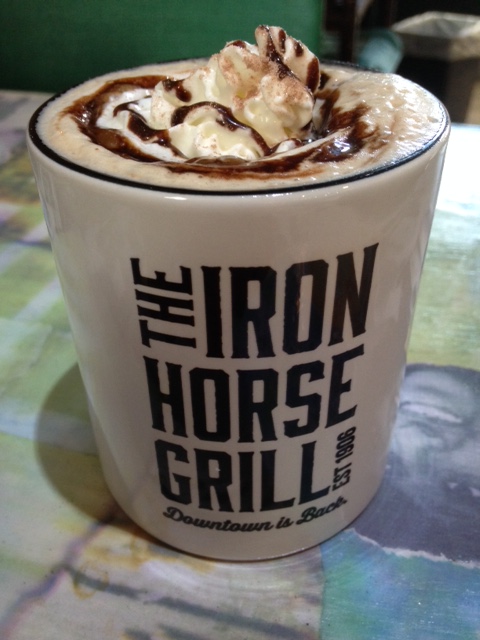
Coffee by Jennifer Pendleton at Bricks, French Camp, MS

I would love to sit down with you as you read this. I would love to visit over a leisurely cup of coffee and hear about the parts of your life that have no script. The parts that leave you feeling helpless and hopeless. The parts that make you say, “What am I supposed to do now?”

I would tell you about the situations in my life where I’ve slammed into brick walls, hurt, confused and wishing I had a script to follow, a map out of the darkness, a way to stop the pain.

As the steam rises from our coffee cups, we can remind each other that the brokenness of this world will knock on our front door, no matter how much protection we think we have wrapped around our life. There’s no bubble wrap for life.

And that is where the fight for hope begins. Because when there is no script, we get to write our own lines. We become Hope Warriors. And we just may find the badass hiding inside us as well.

When There Is No Script has been about finding our footing in the darkness, asking questions about the journey, and meeting brave Hope Warriors along the way.  We’ve looked at questions like:

Why fight for hope?

What is hope?

What does fighting for hope look like?

What is a hope warrior?

What is brokenness?

Sprinkled among these posts, I’ve had the honor of sharing stories of Hope Warriors – people who have decided that the struggle will not define them, and the darkness will not win.

Heather Hollander wrote about the reality of having hope when the world is filled with suffering and tragedy in her post Do The Next Thing.

Tara Dickson shared about her fight for hope in the midst of losing her husband to brain cancer in Beauty in Sorrow.

Becky Spies shared how God beautifully redeemed the broken and hurting places in her life.

Linsey Ewing wrote a courageous post about  becoming a Hope Warrior and her journey with Bipolar Disorder.

Tammy Gonzalez shared a piece of her story that reminds us of the power of words – the negative ones we speak to ourselves and the life-giving ones we receive from others.

Natalie Ogbourne wrote about her fight for hope in the midst of discouragement and despair in Standing Against the Waves.

These stories are so important. It took great courage for these ladies to write about their fight for hope and it gives courage to us, the readers of their stories. Because even if our struggles don’t look the same, our needs are the same. We need to know that we will see the beauty of redemption and that the fight will have been worth it.

The darkness doesn’t last, but the strength that comes from fighting does.

Keep fighting for hope, my friend.

You are worth it.

Becoming a Hope Warrior

I am so excited to welcome Linsey Ewing today. Linsey is my cousin (which makes her FABULOUS in my book) and, even more important, she has a story of hope that she is just beginning to share.  Linsey’s courageous post gives an inside view of her fight for hope in the midst of being diagnosed with Bipolar Disorder.

*******************************************

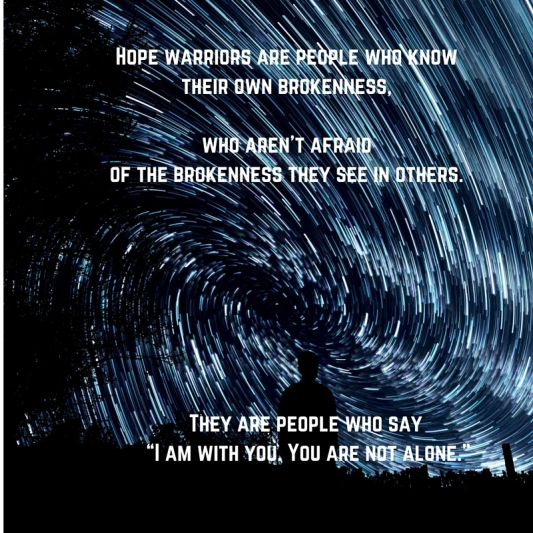
“Hope warriors are people who know their own brokenness, who aren’t afraid of the brokenness they see in others. They are people who say ‘I am with you. You are not alone.’”

When I saw these words on Erin’s blog, I gave a mental cheer.

I’m a Hope Warrior!

ompaz-dn-9i-greg-rakozy

I believe hope is an essentially human quality—what separates us from every other creation in the universe. For a time, though, I forgot this little maxim of mine, and I gave up hope, or I thought I did. I stopped listening to myself and I failed to recognize the great power I had within me—the power that hope gives us.

Now I know I’m a Hope Warrior and I do my best to use that power every day. I’d like to share my story with you, my struggle for hope and how that hope was, for a time, a bent and twisted thing, and the freedom that I’ve found in real hope.

I’ve struggled with depression all my life. Even as a young child I withdrew from people, partly because I am intensely introverted, partly because I would occasionally receive an emotional blow from some heavy, age-inappropriate topic and needed to retreat to process it.

My depression became more pronounced through my adolescence and young adulthood, when hormones and general angst didn’t do me any favors, and I fought it through every means available.  I went to therapy, took prescription medication, and self-medicated with a lot of alcohol and a little drug use.  Several of those things worked, while I was using them, but none of them treated the underlying problem, mostly because I never realized there was an underlying problem.

Though I got several “diagnoses,” no one explained to me that I had a disease that would require constant attention and treatment. As a result, I would go to therapy or take anti-depressants for a few months, feel better, and stop treatment until it got so bad that I needed help again. And I only got help when it was really bad—when I stopped functioning, couldn’t stop crying, couldn’t get out of bed for a week, or had self-harm fantasies.

The worst of these times was March 2012. In the first months of that year, my life flipped upside down, and I was under extreme pressure.  I completely broke down, as I believe anyone would have under the circumstances. I was encouraged seek help, which I did, and I was put on yet another anti-depressant. This time I stayed on it.

Six months later I met some friends at a local bar for drinks. When they were ready to go, I told them I was going to finish my beer and I’d be right behind them, but I didn’t leave after that beer. I stayed another five hours. I drank more beer. I drank a total of eight 16oz cans of beer. I closed the place down, talked to everyone there, almost went home with someone to whom I’d given a fake name, and all but danced on the bar.

At closing, I got in my car and drove home. I passed two police cars, one of which had someone pulled over, but no alarm bells went off. I missed my driveway and had to back up and try again. I walked in the door and fell in my bed fully clothed including shoes.

When I woke up, I couldn’t believe what I had done—literally couldn’t believe I had acted that way. (Remember how I said I was an intense introvert?)  I hate talking to strangers. I don’t like bars and will only go if I’m with a friend or a small group and don’t have a choice. I’m not a drinker since my early college (self-medicating) days. I am a rule-follower—it’s not like me to drive drunk or be heedless of authority figures around me.

This behavior was so far outside my character it was like I’d been possessed. I was so ashamed of myself that I spent that Sunday wallowing in self-hatred. First thing Monday I began making calls, trying to find a doctor to help me figure out what happened.

Many months and mental health professionals later, I was diagnosed with Bipolar Disorder, untreated and undiagnosed because I had only ever presented with symptoms of depression and this was my first manic episode. It did, however, mirror an earlier period when I was drinking heavily (self-medicating with a depressant) and acting out wildly, but at that time neither I nor anyone around me was aware I was acting out of character. Basically the depressants (prescription or otherwise) only treated half of my disease, causing the other half to manifest disproportionately.

Bipolar also explained other behaviors that I now know are hypomanic (still potentially harmful, but not as obviously reckless as behaviors typically associated with mania), but that I had always assumed were character flaws or strengths: bouts of frenzied spending; inability to manage my money;  times when I would start a dozen projects without completing any of them; times when I would take on more than any reasonable person could expect to accomplish—and pull it off; losing time; and soaring feats of creativity and accomplishment.

Those words, “Bipolar Disorder” were like a death toll for me. Those words meant I was crazy and I would never be normal. They meant I would have to keep this filthy secret about myself, because I would be judged from the moment anyone knew and no one would ever love me. I knew I’d never be able to have another romanic relationship, because who would want to be with someone crazy? I knew I’d never be able to have children because I wouldn’t be able to take care of them, plus I could pass this disease along.

I no longer knew what parts of me were me and which parts were the disease. I suddenly didn’t know who I was anymore.

In my mind, depression was an ok thing to have (remember I’d never thought of it as a disease), but Bipolar Disorder was a disorder, something that I’d have to live with forever, from which I could never be cured or healed, for which there was no hope.

Speaking of hope, isn’t that supposed to be what I’m talking about?

Yes, but Erin’s quote is also about brokenness—recognizing it in ourselves and others and being unafraid of it. I’ve never been afraid of others’ brokenness, but I was terrified of my own. I thought it was my fault for being sick—not that Bipolar Disorder explained why I did sometimes did “bad” things, but rather it was the reason I was a bad person.

I lived with this mentality for four years, and I got so used to living with it that I stopped noticing how it affected my outlook and attitude.  In those years I had more big life-changes, and in 2014 things really started to go downhill fast. I stayed depressed—my medication kept me out of bed most of the time, but I lived in daily fog of unhappiness. When I paid attention to it at all, I blamed the depression on my external circumstances—my living situation, my home, my job. I never acknowledged that things were steadily getting worse, regardless of what was happening in my environment.

Then my amazing therapist recommended (actually, she more or less twisted my arm off) I enter a outpatient day program to see if we could get to the source of the problem. What finally convinced me to try it was when she looked me in the eye and said “We are missing something. Your quality of life is shit.” I realized she was right, and I hadn’t noticed.

Some other things I hadn’t noticed until I was in the program was how little I was doing to help myself—how little hope I had, and how twisted and wonky that hope was.

I never hoped to get better. I never hoped to be understood, accepted, treated fairly, or acknowledged as a human being rather than a disease. I never hoped to be loved for my true self. I never hoped to be successful or to do meaningful work. I never hoped to get married or have children.

Here are the things I did hope for: I hoped it would go away. I hoped swallowing pills would remove my symptoms—I was right to take my medications, but I never paid attention to what they were (not) doing for me, so I failed to participate in my own treatment. I hoped that other people would read my mind, that they would research my disease and find ways to help me with it, but I was unwilling to communicate about or research it myself. I hoped that people would love me in spite of my disease and for myself alone, but I withheld myself from them. I hoped that I would not get depressed or manic, but did nothing to prevent it. I hoped people would reach out to me, but I withdrew from them and sometimes even punished them for asking questions. I hoped that therapists and doctors would cure me, but I did little to help them understand what was wrong.

But this story has a happy ending. Now that I’ve completed treatment and embraced my Hope Warrior status, I’m happy to say that I’m healthier than I have ever been, and my hope is fat and healthy. I can contemplate my own brokenness without fear, or even sadness.

I have accepted that I have an incurable disease, that it is part of me but doesn’t define me, and I believe I am great because of and in spite of it.

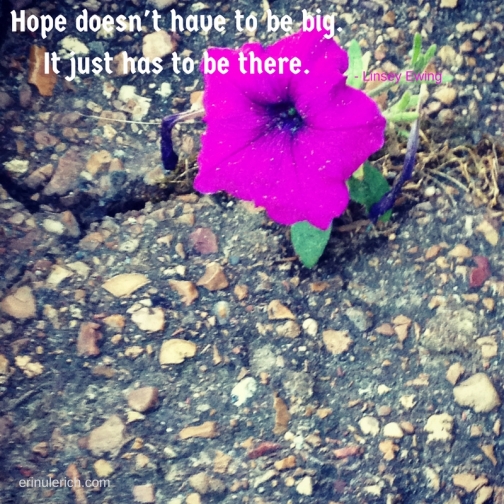
The best news is I have TONS of hope. Here’s the thing though—the hope I have these days isn’t always big or grand—I can’t always manage to hope for world peace—but it’s real and realistic, and that’s the cool thing about hope. It doesn’t have to be big, it just has to be there.

hope-doesnt-have-to-be-big-it-just-has-to-be-there

Here’s what I hope now: I hope my story helps you, whether or not you are mentally ill. I hope for some of you I put words to things you didn’t even know were in your heart, as Erin’s words did for me. I hope you see that the following list can apply to any situation that seems hopeless, not just facing Bipolar or another disease:

Oftentimes hope for me means getting out of bed in the morning, not going to bed in the afternoon, or setting a 30-minute timer for being in bed. Sometimes hope means hanging on when I know things will not look better in the morning or for many mornings after—when I know tomorrow will be just as bad if not worse than today.  It means having faith that, when I’m doing things that hurt me, I will eventually stop—that at some point I will come back to baseline (or “normal”) and I will be able to sort out whatever mess I’ve gotten myself into.

Hope is forgiving myself for making those messes and planning for future messes. Hope is strategizing ways to keep myself safe when I’m not myself. It’s asking for help from those who love me and trusting that they do love me, even when I feel most unlovable.  It means being open and honest about what I’m going through, with myself as well as with others. Hope means knowing I have a disease that is at best manageable, not curable, that it does and will affect me every day of my life, but that does not mean every day has to be affected by it.

The hardest part of being a Hope Warrior is knowing that my friends and family do not understand, not because they don’t love me, but because they are not me. They don’t understand because they are ignorant, and that is not their fault. They don’t feel and see and know what I do. If I want them to, I have to tell them, but my powers of description are limited, and I need to realize that they will never completely understand. My parents will continue to ask questions that hurt me. My friends will continue to invite me to do things that would be harmful to me. They can’t remember everything, and they are not responsible for my care.

Hope is remembering, when those things happen, that it does not mean I am unimportant or unloved. Hope is caring for myself instead of waiting for others to do it for me. Hope is choosing to see love as it is given to me, not only how I would prefer to receive it.

Hope is hard.

That’s why it takes a Warrior.

What Is A Hope Warrior?

wonder-woman-533663_1920

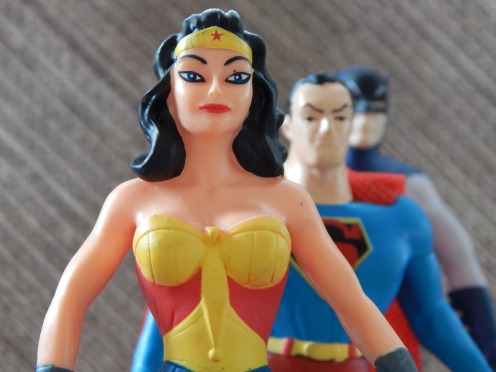
My sister and I grew up watching Wonder Woman fight for justice every afternoon after school. We cheered as she deflected gunfire with her bracelets and wrapped bad guys in her Lasso of Truth. We spent many hours playing Wonder Woman, fighting against imaginary villains. We made bracelets out of duct tape and used rope for our own Lassos of Truth.

Our parents loved the Superman movies. At the end of these movies, everyone in the theater would clap and cheer when Superman saved the day.

Our family enjoys watching the old Batman television shows. My kids love it when the words “ZAP” and “POW” pop up during the fight scenes. And then there’s the way everything is labeled. The secret entrance to the bat cave, the bat-shark repellant that appeared on batman’s belt right before he battled a shark, the buttons on the bat computer.

It is inspiring when someone stands up to evil and wins, especially against unbelievable odds. We clap and cheer for our favorite super heroes, even though deep down we know victory is sure. Superman always saves the day, Wonder Woman always gets the bad guys and Batman will not rest until the villains are in Gotham jail.

In real life, however, the struggle doesn’t follow a script. We don’t figure out a solution between commercials. The warriors don’t have to change into a certain outfit to fight. And the villain doesn’t always have “bad guy” written all over him.

In real life, fighting for hope is a constant, costly battle that wears on us-mind, body and soul. A Hope Warrior is someone who engages in that battle because they do not want despair to have the last word. Hope Warriors have a quiet, fierce strength born out of a belief that circumstances do not define a situation.

Hope Warriors are as different as the battles they face, but they do have a few things in common.

Hope Warriors are real.

They don’t hide behind the word “fine”, and if you say “How are you?” they will probably answer honestly.  Sometimes they even let loose on the expletives, because honestly, sometimes the thing that best describes a situation is a well-placed four letter word.

Hope Warriors Feel.

Hope Warriors aren’t the ones who hunker down and just try to make it through a situation. They feel the emotions. My friend Sara Littlejohn tells me often “Up and out, Erin. Let the emotions come up and out.” Stuffing emotions doesn’t make us strong. It makes the pressure build up until we reach our breaking point or look for ways to stay numb. And we weren’t meant to live life numb.

Hope Warriors go to counseling sessions because it will help them. They do the hard work of repair so that healing can happen. Hope Warriors step toward healthy. And they want that for those around them.

Hope Warriors reach out to help others.

As we fight for hope we recognize Hope Warriors around us and we cheer them on. We know how hard it is to keep hoping and we know that hope is worth fighting for. Hope Warriors need each other because there are days when our circumstances mock any bit of hope we feel.

Hope warriors are not people who have it all together. They are not people who give surface answers to the messiness of life. Hope warriors are people who know their own brokenness, who aren’t afraid of the brokenness they see in others. They are people who say “I’m with you. You are not alone.”

Hope warriors

Are you wondering if you are a Hope Warrior? Take a look at your life. Has there been a time when you’ve stood before the darkness in your life and yelled (or even whispered) “You. Will. Not. Win.”

Hello there, Hope Warrior. I’m so glad you are here.